
Contents
MetaTrader 5 (MT5) is a multi-asset trading platform developed by MetaQuotes. It followed MetaTrader 4 (MT4), one of the best-known retail trading platforms in the financial markets. Although MT5 arrived after MT4, it should not be viewed simply as a newer version of the same software. It was built on a different architecture and designed to support a broader range of markets, order types and trading functions.
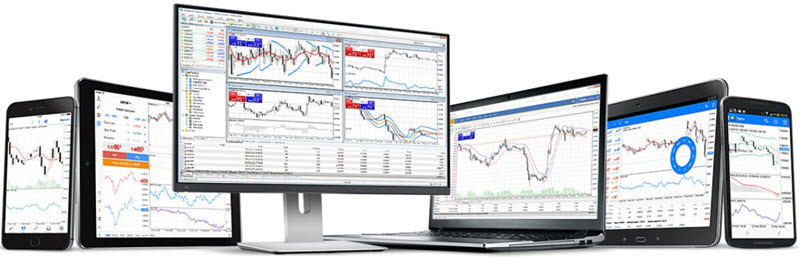
MetaTrader 5, or MT5, provides a customizable trading environment with charts, technical indicators, automated trading tools and several order-management functions. MT4 became strongly associated with retail forex trading, while MT5 was designed as a broader multi-asset platform that can support forex, shares, futures, commodities, indices and CFDs where the broker provides access to those markets. The actual instruments available therefore depend on the broker rather than on MT5 alone.
MT5 is used by both discretionary and automated traders. A discretionary trader can analyse charts and manually place orders, while an algorithmic trader can develop trading programs using the MQL5 programming language. The platform also supports strategy testing, market depth where supplied by the broker, economic-calendar information and copy-trading functions. These additions make MT5 useful for traders who want more functionality than a basic order-entry platform.
What is Forex?
Forex stands for foreign exchange. Forex trading involves buying one currency while simultaneously selling another. Currency values constantly change relative to each other, allowing traders to speculate on whether one currency is likely to strengthen or weaken against another. The market operates internationally and is one of the largest financial markets by trading volume.
When you travel and exchange US dollars for euros, you are participating in the foreign exchange system, although speculative forex trading normally takes place electronically through currency pairs such as EUR/USD, GBP/USD or USD/JPY. Exchange rates are affected by many factors, including interest rates, inflation, economic growth, political developments, central-bank policy and changing expectations among investors and financial institutions.
Retail traders usually access forex through a broker rather than directly participating in the institutional interbank market. Depending on the jurisdiction and broker, this exposure may be provided through spot-style margin forex products, contracts for difference or other derivatives. MetaTrader platforms became popular partly because they gave retail traders a familiar interface for analysing these currency markets and sending orders to their chosen broker.
What is MetaTrader 5 (MT5)?
MT5 is a multi-asset trading platform that can be used for forex, stocks, futures, CFDs and other markets supported by the broker. It is available in several forms, including a downloadable desktop terminal, a browser-based web version and mobile applications. The platform itself does not act as a broker and does not hold the trader’s money. Instead, a brokerage company provides the MT5 account and connects the software to the markets and products it offers.
This distinction is important because two brokers can both offer MT5 while providing completely different trading conditions. One broker may provide only forex and CFDs, while another may connect MT5 to exchange-traded shares or futures. Spreads, commissions, leverage, available markets and execution methods are determined by the broker rather than by MetaTrader 5.
What is web trader software?
Web trader software is a trading platform that operates through an internet browser rather than requiring the trader to install the full desktop application. MetaTrader 5 offers web-based trading alongside its downloadable desktop terminal and mobile applications. The web version can be useful when using a shared or secondary computer because the trader can log in through a compatible browser without installing the complete MT5 program.
The desktop version generally provides the broadest range of MT5 functionality, particularly for automated trading, custom indicators and strategy development. The web terminal focuses more heavily on chart analysis and order execution. Mobile versions are useful for monitoring positions and placing trades away from a computer, although developing and testing sophisticated automated strategies is normally more practical on the desktop software.
MetaTrader 5 MT5
MetaTrader 5 is a multi-feature trading platform offering a broad range of trading and analysis functions. These include technical-analysis tools, multiple order types, charting, economic-calendar information, automated trading systems commonly known as Expert Advisors or EAs, and copy trading. Traders can also create custom indicators, scripts and automated systems through the MQL5 programming environment.
MetaTrader 5 was released in 2010. It is not simply an updated version of MetaTrader 4. This is a common misconception. MT5 uses a different architecture and was designed to handle tasks and markets that extend beyond the original focus of MT4. Which version is best depends on the trader, the broker and the strategy being used. Some traders continue to use MT4, while others prefer MT5 or maintain access to both platforms.
MetaTrader 5 is sometimes considered more suitable for experienced traders because it contains more order types, timeframes, analytical tools and testing functions. That does not mean a beginner cannot use it. The basic tasks of opening charts, placing orders and setting stop losses are relatively straightforward. The more advanced features can simply be ignored until the trader has a reason to use them.
Many larger brokerage companies now offer MT5 because it can handle several asset classes through one trading environment. The platform’s broader market support can be useful to traders who want to monitor currencies, commodities, indices and shares without learning a different interface for every market. Availability still depends on the individual broker and regulatory jurisdiction.
What Can MetaTrader 5 do compared to its predecessor?
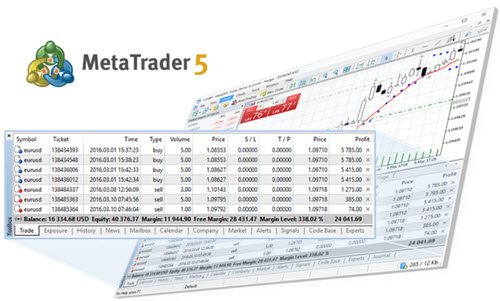
MetaTrader 5 was designed to perform several tasks that MetaTrader 4 was not originally built to handle. This is why reducing the comparison to a simple MT4 versus MT5 argument can be misleading. MT4 developed a huge following among retail forex traders, while MT5 was created as a broader system capable of supporting both OTC trading and exchange-traded markets where the broker and market infrastructure permit it.
Another difference concerns how positions can be recorded. MT5 can support both netting and hedging account systems, depending on the broker and account configuration. Under a netting system, multiple transactions in the same instrument are consolidated into one net position. A hedging system can maintain separate positions in the same instrument. This flexibility allows MT5 to support different market structures and regulatory requirements.
U.S. forex rules have historically placed restrictions on hedging and imposed first-in, first-out requirements on certain retail forex transactions. MT5’s ability to operate with netting-style position accounting made it more suitable for environments where separate opposite positions cannot simply be maintained in the same way. The precise rules affecting a trader still depend on the broker, product and jurisdiction rather than the trading platform by itself.
MetaTrader 5 is designed to be used for more than FOREX trading. It can work well for retail traders accessing stocks, futures, commodities, indices, forex and CFDs where those instruments are made available through the connected broker. This broader market coverage is one of the main reasons MT5 has become increasingly common among multi-asset brokers.
Forex is largely an over-the-counter market in which banks, brokers and other institutions provide liquidity rather than trading through one global centralized exchange. Shares and many futures contracts, by comparison, are traded through organized exchanges with centralized order books. MT5 was designed with enough flexibility to support both types of trading environment, although the trader only receives the markets connected by their broker.
The major improvements made on this version include the following:
- Support for a broader range of markets, including forex, shares, futures, commodities, indices and CFDs, depending on the broker.
- Six types of pending orders: Buy Limit, Sell Limit, Buy Stop, Sell Stop, Buy Stop Limit and Sell Stop Limit. MT4 provides four basic pending-order types.
- Access to the MQL5 environment and marketplace for Expert Advisors, indicators, scripts and other trading tools.
- A more advanced Strategy Tester designed for testing and optimizing Expert Advisors, including multi-threaded testing and distributed processing capabilities.
- Twenty-one chart timeframes, providing more flexibility between very short-term charts and monthly price analysis.
- A larger selection of built-in technical indicators and graphical analysis tools than the original MT4 platform.
- Depth of Market functionality where the broker and instrument provide the required order-book information.
- A built-in economic calendar showing scheduled economic releases and related market information.
- Support for both netting and hedging account systems, depending on broker configuration and applicable market rules.
MetaTrader 5 charting and technical analysis
Charting is one of the main reasons traders use MetaTrader 5. Multiple instruments can be opened simultaneously, and each chart can be customized with indicators, drawing tools, colours and timeframes. Traders can save chart templates and profiles so that the same analytical layout can be applied to different markets without rebuilding the workspace every time the platform is opened.
The additional timeframes available in MT5 can be useful to traders who analyse the same market over several periods. A day trader might compare five-minute, fifteen-minute and hourly charts, while a swing trader can work mainly from four-hour, daily and weekly data. More timeframes do not automatically improve trading results, but they provide greater flexibility when a strategy requires a particular level of market detail.
Automated trading with Expert Advisors
MetaTrader’s Expert Advisors are programs that can monitor markets and place or manage trades according to coded rules. In MT5, these programs are written in MQL5. An EA can be as simple as a script that places a stop automatically or as complicated as a complete systematic strategy analysing several instruments and market conditions.
Automation does not guarantee profitability. An EA performs the rules it has been given, including bad rules. A strategy can also perform well during historical testing and fail when market conditions change. Traders using automated systems therefore need to understand risk limits, testing assumptions and what happens if the software, broker connection or internet connection fails while positions are open.
The MetaTrader 5 Strategy Tester
The Strategy Tester is one of MT5’s more useful improvements for algorithmic traders. It allows an Expert Advisor to be tested against historical price data before real capital is placed at risk. Traders can examine results across different time periods, adjust strategy parameters and study how the system behaved during both favourable and difficult market conditions.
Historical testing still needs to be treated cautiously. A strategy can be optimized so closely to old market data that it performs poorly when confronted with new prices. Trading costs, spreads, commissions and execution differences also need to be represented realistically. An attractive backtest is evidence about the past rather than proof that the strategy will generate the same result in future.
MT5 for forex trading
Although MT5 was designed to handle more markets than MT4, it remains widely used for forex. Traders can follow multiple currency pairs, place pending and market orders, use automated systems and analyse price action through technical indicators. Whether the broker offers major pairs, minor pairs or more unusual currencies depends entirely on the trading company connected to the platform.
Forex traders should pay attention to the broker rather than assuming every MT5 account provides identical conditions. Spreads, commissions, leverage, swap rates and execution can differ substantially. MT5 supplies the interface and trading technology, while the broker determines most of the commercial terms that directly affect the cost and risk of the account.
MT5 for stocks and futures
One of MT5’s major design advantages is its ability to work with exchange-traded instruments. Depending on the broker, traders may be able to access shares, futures and other securities directly from the platform. The Depth of Market window can be particularly useful in these environments because it can display available buying and selling interest at several price levels when the necessary market data is provided.
Traders should check whether the instrument is an actual exchange-traded security or a CFD tracking that security. Buying a share CFD through MT5 is not the same thing as purchasing the underlying company share. The platform can display both types of instrument, so the contract specification and broker documentation determine what is actually being traded.
MT5 on desktop, web and mobile
MetaTrader 5 can be accessed through desktop, web and mobile interfaces. The desktop terminal generally provides the richest environment for chart customization, Expert Advisors, custom indicators and strategy testing. The web terminal is useful where software installation is inconvenient, while mobile applications allow traders to check charts, manage positions and receive account information while away from their main computer.
Having access from several devices can be convenient, but it also creates security responsibilities. Traders should protect broker credentials, use strong passwords and activate any additional account security provided by the broker. A trading platform being technically secure cannot prevent losses where the trader shares login information with another person or enters credentials into a fraudulent website.
MetaTrader 4 vs MetaTrader 5
MT4 remains attractive because it is familiar, relatively simple and supported by a very large collection of older indicators and Expert Advisors. Traders who only need conventional forex functionality may see little reason to move away from a working MT4 setup. MT5 provides more timeframes, additional pending-order types, a stronger strategy-testing environment and broader multi-asset support.
The better platform therefore depends on what the trader needs. Someone running an established MQL4 strategy may prefer MT4 because moving the system requires additional development work. A trader beginning from scratch and wanting access to several asset classes may find MT5 more practical. Platform choice should follow the strategy rather than becoming a trading objective in itself.
MetaTrader 5 is an all-in-one platform capable of supporting Forex, Stocks and Futures where these markets are connected by the broker. It is now offered by brokerage companies in many jurisdictions and is used by both retail and professional market participants. Its popularity comes partly from the combination of manual trading, automated trading, technical analysis and multi-asset functionality inside one interface.
Brokers offering MetaTrader 5
The number of brokers offering MT5 has expanded considerably since the platform was introduced. Availability can differ by country and legal entity, so a trader should confirm the current platform offering directly with the broker before opening an account. Regulation, execution quality, costs and available markets are more important than choosing a company simply because it provides MetaTrader 5.
- ForexTime / FXTM
- IQ Option: Recommended broker. Read IQ option review
- NordFX
- Swissquote
- Admiral Markets / Admirals
- ActivTrades
The original version of this page also referenced IQ Option. Broker product ranges and platform availability change over time, so traders should verify whether a company currently provides MT5 in their jurisdiction rather than relying on an old platform list. You can still read the existing IQ option review for information about that broker.
MQL4 and MQL5 compatibility
Important note: systems coded using MQL4 are not directly compatible with MQL5 or MT5. The two programming languages share similarities, but an MQL4 Expert Advisor or custom indicator cannot normally be moved to MT5 simply by copying the original file. Existing systems may need to be rewritten or converted before they can operate correctly in the newer environment.
This compatibility issue is one reason some traders continue using MetaTrader 4 even when their broker offers MT5. A trader who has spent years developing an MQL4 strategy may have little incentive to rebuild it solely to use the newer platform. New algorithmic traders, however, may prefer beginning with MQL5 because MT5 provides the more modern development and testing environment.
Summary
If you prefer a simple platform and mainly trade forex using an existing collection of MT4 indicators or Expert Advisors, MetaTrader 4 can still be perfectly adequate. MetaTrader 5 becomes more attractive when you want additional order types, more timeframes, a stronger strategy tester, broader multi-asset support and a more modern automated-trading environment.
The decision should also include the broker. MT5 does not determine spreads, commissions, leverage or which markets you can trade. Those conditions come from the brokerage company operating the account. A strong trading platform connected to an unsuitable broker remains an unsuitable trading account.
For new traders with no existing dependence on MQL4 software, MT5 is generally the more flexible platform to learn because it was designed around a wider range of markets and trading methods. For established MT4 users, changing platforms should solve an actual problem rather than being done simply because the number five is larger than the number four.